
When missing teeth need replacing, dental implants and dentures are the two main tooth replacement options available. Both restore your smile and chewing function – but they work in fundamentally different ways, with different implications for your oral health, your jaw bone, and your long-term dental costs.
This guide walks through how each option works, how they compare across every factor that matters, and what to think through before your consultation with a dental professional.
Key Takeaways
- Dental implants replace missing teeth from the root up and are permanently fixed in the jaw bone; dentures are removable prosthetics that rest on the gums
- Dental implants stimulate the jaw bone and prevent bone loss; dentures do not – resorption continues underneath
- A single dental implant in Australia typically costs $3,000–$7,000; full dentures generally range from $1,500–$5,000
- Dental implants can last 20+ years with proper care; traditional dentures typically need replacing every 5–10 years
- Implant-supported dentures offer a middle option – implant stability at lower cost than individual tooth replacement
What Dental Implants and Dentures Involve
Dental Implants
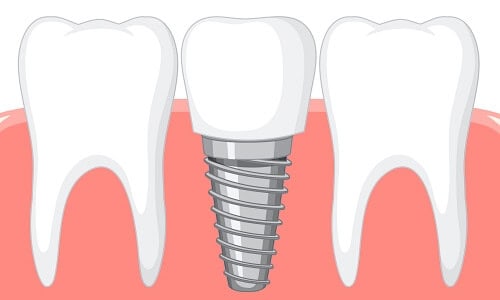
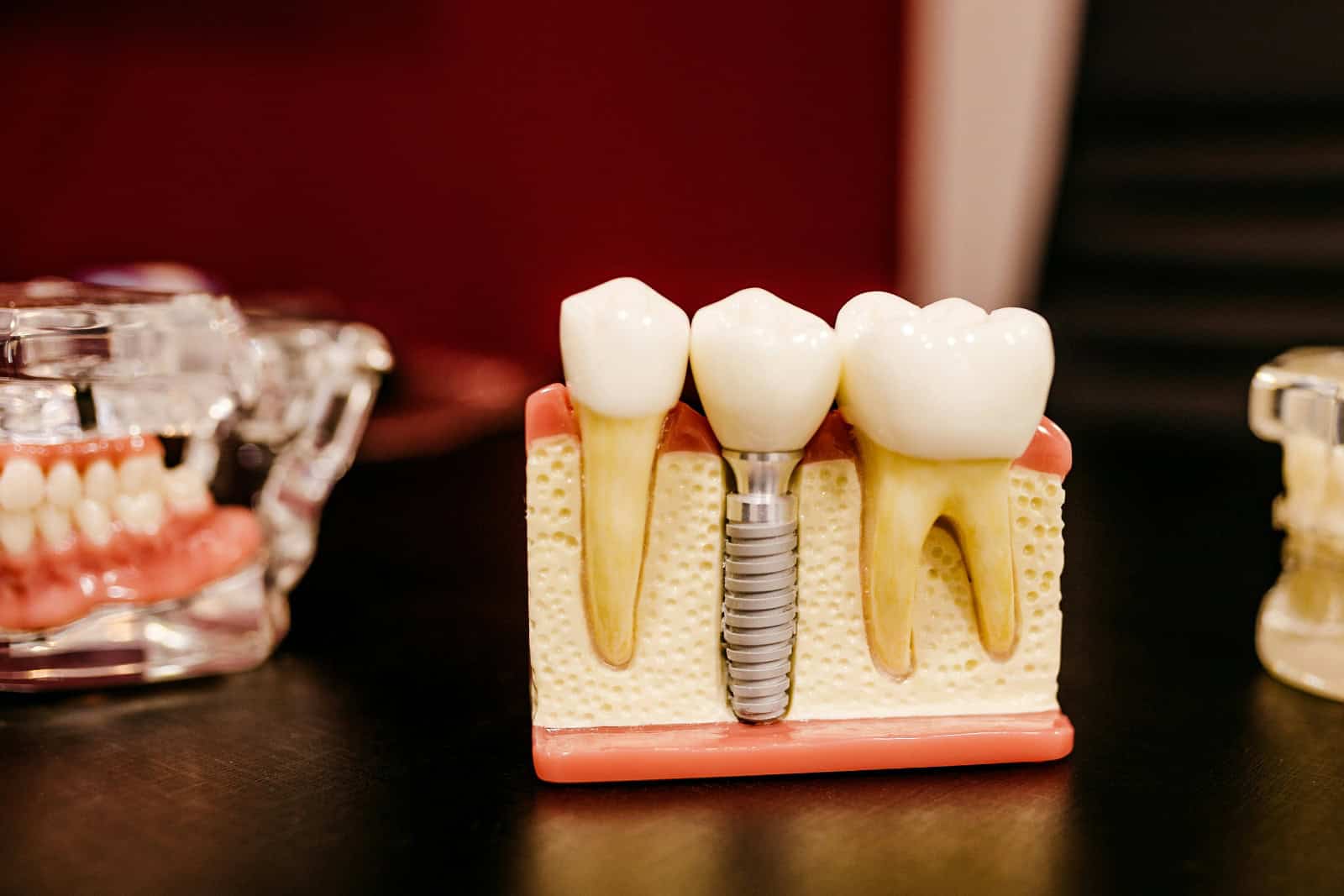
Dental implants replace missing teeth from the root up. Titanium posts – artificial tooth roots – are placed into the jaw bone by a specialist oral surgeon or periodontist. The bone grows around and fuses with each post through osseointegration, creating a stable and secure foundation for the replacement tooth above. A custom crown, fabricated at a dental laboratory to match your natural teeth in shape, size, and colour, attaches to the post via an abutment.
Unlike traditional dentures, dental implants function like natural teeth – fixed, stable, and maintained like any other tooth. The dental implant process takes four to nine months from consultation to final crown. Dental implant treatment involves a surgical procedure and a healing period, but most patients find the experience more manageable than expected.
Dentures
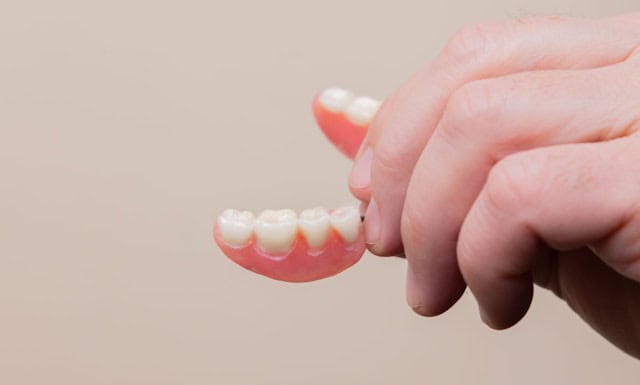
Dentures are removable dental appliances – prosthetic teeth set into an acrylic base that rests on the gums. Partial dentures replace a few teeth while working around remaining natural teeth; complete dentures replace a full upper or lower jaw arch. Unlike dental implants, dentures require no oral surgery and can be fitted within a few weeks.
Traditional dentures provide a natural appearance and restore basic function for patients with missing teeth, but they do not address what is happening to the jaw bone beneath. Because bone continues to change shape after tooth loss, conventional dentures need relining every five to seven years and eventual replacement – typically every five to ten years.
How Dental Implants and Dentures Compare
| Feature | Dental Implants | Dentures |
|---|---|---|
| Fixed or removable | Fixed – does not come out | Removable – taken out for cleaning |
| Stability | No movement or shifting | Can shift when eating or speaking |
| Bone health | Stimulates jaw bone, prevents bone loss | Bone resorption continues underneath |
| Effect on natural teeth | Independent of adjacent teeth | Partial dentures may stress surrounding teeth |
| Longevity | 20+ years (post); 10–20 years (crown) | 5–10 years before replacement |
| Eating | Full chewing function | Limitations – avoid hard/sticky foods |
| Oral hygiene | Brush and floss like a natural tooth | Daily removal, cleaning, overnight soaking |
| Upfront cost (AUS) | $3,000–$7,000 per tooth | $1,500–$5,000 for full dentures |
| Long-term cost | Low – minimal ongoing maintenance | Relining, repairs, eventual replacement |
| Surgery required | Yes – invasive procedure | No |
| Bone density needed | Yes (or bone grafting first) | No |
The Bone Health Difference
This is the most significant long-term difference between dental implants and dentures – and the one most patients are unaware of before their first consultation.
Natural teeth have roots that transmit chewing forces into the jaw bone every time you bite. This stimulation signals to the bone that it is needed, and the bone maintains its density accordingly. Tooth loss removes that signal. Bone resorption begins at the extraction site – within the first year, the jaw can lose around 25% of its width where the missing teeth were. Without intervention, bone loss accumulates over years and alters facial structure.
Dental implants are the only tooth replacement that restores this stimulation. The titanium post transmits bite forces into the jaw, stimulating bone growth the same way natural tooth roots do. This bone preservation protects the long-term oral health of remaining natural teeth, maintains facial appearance, and means the treatment site stays stable over decades.
Unlike dental implants, conventional dentures do nothing to maintain bone density. Bone loss continues beneath the denture base, which is exactly why the fit degrades and relining becomes necessary. The sunken facial appearance associated with long-term denture wear is largely the result of this unchecked bone loss – and it compounds over time.
Cost Over Time
The upfront cost difference between dental implants and dentures is real, but the long-term picture is closer than it first appears.
A single dental implant in Australia typically costs $3,000–$7,000, covering the post, abutment, and crown. Full dentures range from $1,500–$5,000. Where bone grafting is required before dental implant treatment, add approximately $2,000–$3,500. Dental implant costs vary by case complexity, number of missing teeth, and whether preparatory work is needed.
Dentures carry ongoing costs: relining at $300–$800 every five to seven years, full replacement every decade, and adhesives for patients who need additional retention. Over 20 years, total denture costs often approach the upfront investment of dental implants – and dental implants require little maintenance beyond regular dental check-ups once established.
For a full breakdown of dental implant costs in Melbourne, see how much dental implants cost in Melbourne.
Caring for Your Tooth Replacement
Maintaining good oral hygiene looks different for dental implants vs dentures – both require commitment, but the routine is distinct.
Dental implants are maintained like your natural teeth. Brush twice daily, clean interdentally around the implant crown with floss or an interdental brush, and attend regular dental check-ups at least twice a year. Dental implants cannot develop decay, but the gum tissue around them is vulnerable to peri-implantitis – a form of gum disease affecting the implant site – if oral hygiene lapses. Good oral hygiene habits protect dental implant benefits for the long term and give the implants the best chance of lasting decades.
Dentures require daily removal and cleaning with a soft denture brush and appropriate cleansing solution – not regular toothpaste, which can scratch the acrylic surface. Soaking overnight prevents the material from drying and warping. Regular dental check-ups remain important for denture wearers to monitor fit, gum tissue health, and the oral health of any remaining natural teeth.
With proper care, dental implants deliver long-term benefits that require very little ongoing intervention. Dentures with proper care last five to ten years before replacement. Both reward consistent dental health habits – but the maintenance burden with dental implants is significantly lower over a 20-year period.
What About Implant-Supported Dentures?
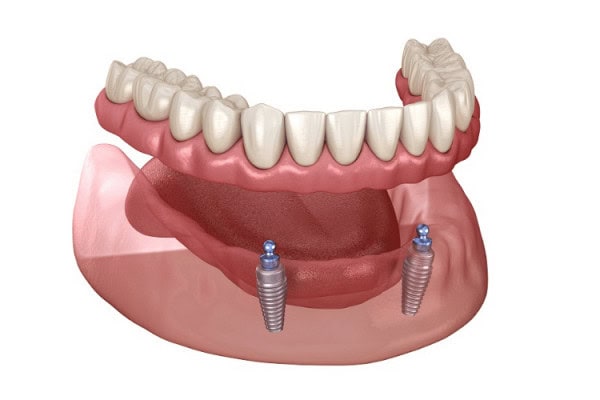
For patients with multiple missing teeth across an arch, implant-supported dentures offer a middle path. Two to four dental implants are placed in the jaw bone, and the denture attaches to them for stability. This eliminates the movement and slipping of removable dentures and significantly improves chewing function.
Unlike dental implants that replace individual teeth with one post per crown, implant-supported dentures replace a full arch using fewer implants – making them a more accessible tooth replacement option for patients where one-per-tooth replacement is not practical. They also provide some bone stimulation at the implant sites, which is meaningfully better for bone health than conventional dentures, though not equivalent to full individual replacement.
If you are missing most or all teeth in the upper or lower jaw, implant-supported dentures are worth discussing with your dental professional alongside the full-arch implant options.
Which Tooth Replacement Option Is Right for You?
Choose dental implants if you have sufficient bone density and are in good general health. Dental implants offer the strongest long-term oral health outcomes – bone preservation, stable function, and no ongoing management beyond normal tooth care. For patients who want a permanent replacement tooth that behaves like a natural tooth, dental implants are the most suitable tooth replacement option available.
Consider dentures if significant bone loss has already occurred and dental implants would require extensive bone grafting, or if oral surgery is not appropriate given your health circumstances. Dentures are a well-established tooth replacement and remain the right choice for many patients – the important thing is understanding the limitations before committing.
If you are only missing a few teeth, a dental bridge is another tooth replacement option worth discussing. Unlike dental implants, a dental bridge does not require surgery, but it does rely on surrounding teeth for support.
Other tooth replacement options aside, the clearest path to a decision is a consultation that includes 3D imaging. This shows your bone density, the position of nerves and anatomical structures, and what dental procedures are appropriate for your specific dental needs. A dental professional at a dental clinic experienced in implant treatment can assess your patient’s oral health situation and give you an honest recommendation for your circumstances.
At Our Balwyn Practice
Dr Rostkier has practised in Balwyn for 25+ years and works through this decision with patients regularly. For dental implant cases, surgical placement is performed by a specialist periodontist working from a detailed treatment plan – Dr Rostkier manages the planning and fits every final restoration himself.
“My job at the consultation is honest assessment,” says Dr Rostkier. “Sometimes dental implants are clearly the right move. Sometimes the patient’s bone situation means we need to think differently. I’d rather give someone the right answer for their situation.”
We use 3D imaging and digital scanning for treatment planning – no messy traditional impressions. HICAPS is available for on-the-spot health fund claims, and payment plans can be discussed at consultation.
To book a consultation, call (03) 9831 3272 or book your appointment online now. We see patients from Balwyn, Balwyn North, Deepdene, Canterbury, Camberwell, Hawthorn, Box Hill, Surrey Hills, Mont Albert, Kew, and Doncaster.
Frequently Asked Questions
Are dental implants better than dentures?
For most patients with adequate bone density and good general health, dental implants offer stronger long-term outcomes – permanent stability, bone preservation, and no ongoing adhesives or removal. Dentures are a practical tooth replacement option for patients who cannot have surgery or face significant bone loss. The right choice depends on your bone situation, health history, and priorities – a consultation with a dental professional is the clearest way to find out.
What are the downsides of dental implants?
The main considerations are the upfront cost ($3,000–$7,000 per tooth), the fact that dental implants involve an invasive procedure, and the treatment timeline of several months. Dental implant treatment may also require bone grafting if bone loss has occurred, adding time and cost. There is a small failure rate of approximately 5%, which is assessed at the planning stage.
Can I switch from dentures to implants?
Yes – many patients make this transition. Long-term denture wear causes bone resorption, so bone grafting may be required before dental implant treatment can proceed. The earlier you have this assessed by a dental professional, the more tooth replacement options are likely to be available.
How does the dental implant process compare to getting dentures?
The dental implant process takes four to nine months from consultation to final crown – most of that is the healing period for osseointegration. Getting dentures typically takes two to four weeks. For patients who need a tooth replacement quickly, dentures are faster. Dental implants deliver stronger long-term oral health outcomes but require a longer commitment upfront.
How do dental implants affect surrounding teeth?
Dental implants are independent of adjacent teeth – they do not require surrounding teeth to be ground down or used as supports, unlike a dental bridge. This means remaining natural teeth are left untouched. Partial dentures, by contrast, use clasps that attach to remaining teeth, which can place additional stress on those surrounding teeth over time.
What makes a good candidate for dental implants?
Most adults missing one or more teeth are candidates for dental implants, but suitability depends on bone density at the implant site, the absence of active gum disease, and general health factors that affect healing. Smoking and uncontrolled diabetes increase risk. Where bone density is insufficient, bone grafting can restore it in most cases. The best way to assess candidacy is a consultation including 3D imaging – a dental professional can review your patient’s oral health situation and advise clearly.
Does health fund cover dental implants or dentures?
Private health fund major dental cover may provide a partial rebate on both dental implants in Balwyn and dentures, depending on your policy level. For dental implants, ask specifically about item codes 688 and 318. For dentures, item codes vary by type. Medicare covers neither. Contact your fund directly to confirm your entitlements before your consultation.
What is the failure rate for dental implants?
Approximately 5%. Most failures occur early, during osseointegration, and relate to insufficient bone density, infection, or healing factors such as smoking. If failure occurs, re-implantation is often possible after the site has healed. Your dental professional should assess your specific risk profile before any dental procedures begin.
This content is for general information only and does not constitute clinical advice. Individual treatment costs and outcomes depend on assessment findings specific to each patient.