
If you’ve been quoted a price for dental implants in Melbourne that surprised you – in either direction – you’re not alone. Implant costs in Melbourne vary significantly, and the reason isn’t straightforward. The right question isn’t just “how much?” but “what’s included, and why does this number look the way it does?”
This guide breaks down what you can expect to pay for dental implants in Melbourne, what drives the variation, what private health insurance and Medicare will and won’t cover, and how to think about the long-term value of the investment.
Key Takeaways
- A single tooth dental implant in Melbourne typically costs $3,000–$7,000, including the post, abutment, and crown
- Full arch dental implants (four to eight implants supporting a complete set of teeth) typically cost $25,000–$45,000+ per arch
- Bone grafting, when required, adds approximately $2,000–$3,500 and extends the treatment timeline by three to six months
- Medicare does not cover dental implants in Australia under any circumstances
- Private health fund major dental cover may provide a partial rebate – the amount varies significantly by policy; check with your fund before your consultation
Why Dental Implant Costs Vary
A single question – “how much do dental implants cost?” – can produce answers ranging from $3,000 to $7,000 for a single tooth, and the variation is not arbitrary. The final cost depends on several factors, and understanding what those factors are is the most useful thing you can do before you start comparing quotes.
The main cost drivers:
- Whether bone grafting is needed – not every patient needs it, but those who do face additional surgery, materials, and a several-month delay before implant placement
- The number of implants – single tooth vs. multiple teeth vs. full arch replacement
- The type of final restoration – an individual crown on one implant differs significantly in complexity from a full arch bridge over six implants
- Whether a specialist places the implant – some dentists handle the implant procedure themselves; others refer that stage to a specialist periodontist, which affects how fees are structured
- The technology involved – practices using 3D CBCT imaging, intraoral digital scanners, and CAD-CAM systems have higher fixed costs reflected in their fees but often deliver more precise outcomes
- Location and clinic – Melbourne CBD, inner suburbs, and outer suburbs carry different cost structures
None of these factors should be hidden. A reputable practice will itemise all of them in a written treatment estimate before any treatment begins.
Single Tooth Dental Implant Cost in Melbourne
What a Single Implant Includes
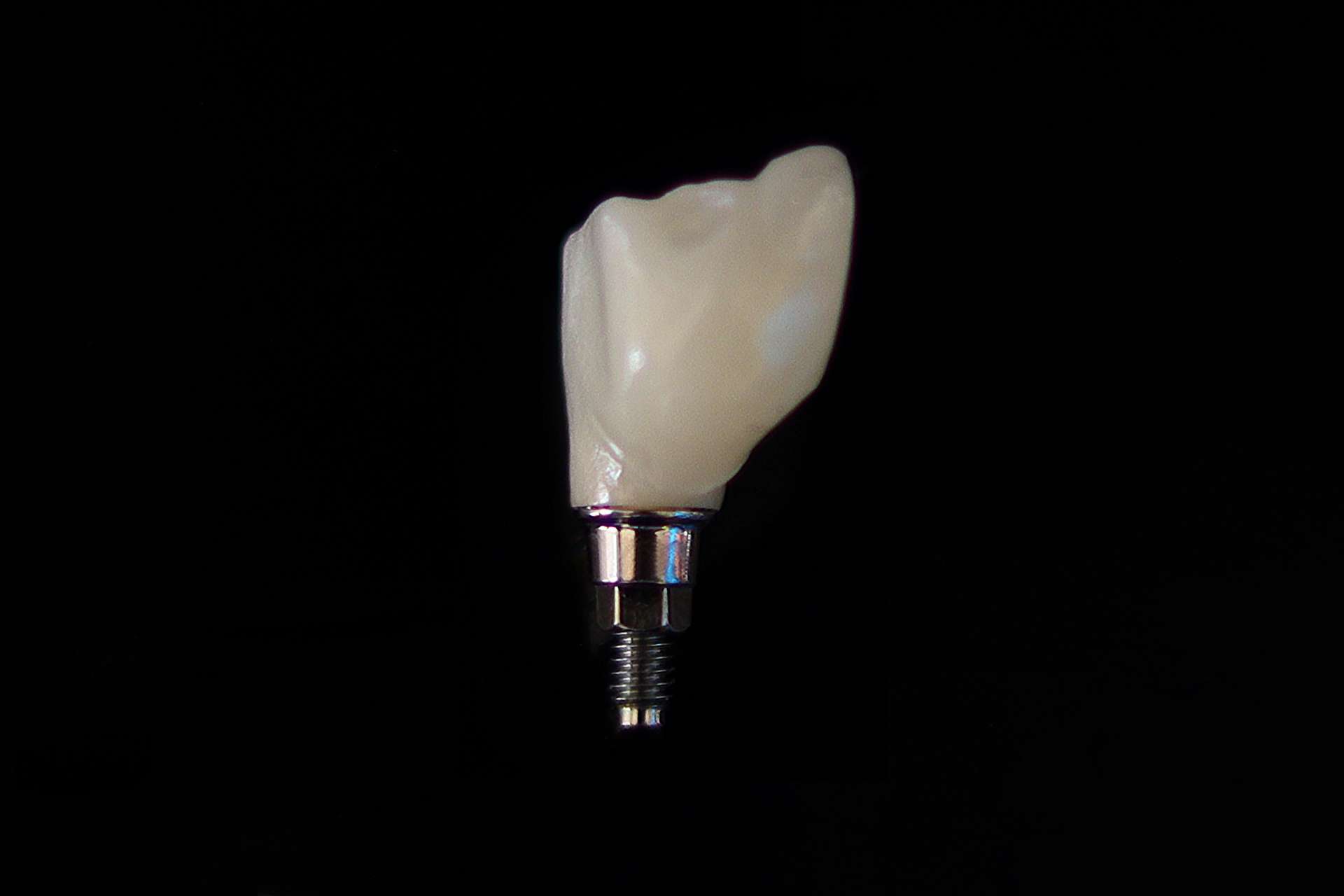
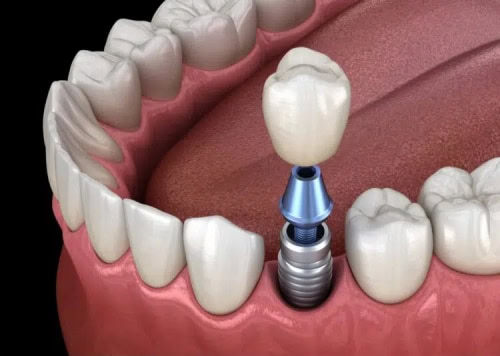
A single tooth implant involves three components:
- The titanium implant post – the artificial tooth root, surgically placed into the jaw bone
- The abutment – the connector piece between the post and the crown
- The crown – the visible, functional replacement tooth, custom-made to match your natural teeth
The price you’re quoted should cover all three. If a clinic quotes only the “implant” without specifying what’s included, ask directly whether the abutment and crown are in that figure.
Melbourne Market Range
A single tooth dental implant in Melbourne typically costs between $3,000 and $7,000, depending on:
- The position of the tooth (front teeth require greater aesthetic precision; back teeth bear more bite load and may use different materials)
- The crown materials used (zirconia, ceramic, porcelain-fused-to-metal)
- Whether bone grafting is required before placement
- How the practice structures specialist fees for the surgical stage
The lower end of that range reflects straightforward cases – good bone volume, no grafting required, standard crown fabrication. The upper end reflects complex cases, premium materials, and specialist surgical involvement.
Bone Grafting
If your jaw bone has insufficient volume to support an implant – usually because of bone loss following tooth extraction or long-term gum disease – bone grafting may be needed before the implant can be placed.
Bone grafting typically adds $2,000–$3,500 to the total cost and extends the treatment timeline by three to six months while the grafted bone consolidates.
Not every patient needs bone grafting. A 3D CBCT scan at the initial consultation is the most accurate way to assess available bone volume – it’s far more precise than standard X-rays and gives a clear picture of whether bone preparation is required. For upper jaw implants near the sinus cavity, sinus augmentation (sinus lift) may be needed if bone height is insufficient – this is a separate procedure with its own cost and timeline implications, and will be identified during the planning stage if relevant.
Full Arch Implant Cost in Melbourne
Multiple Teeth and Full Arch Replacement
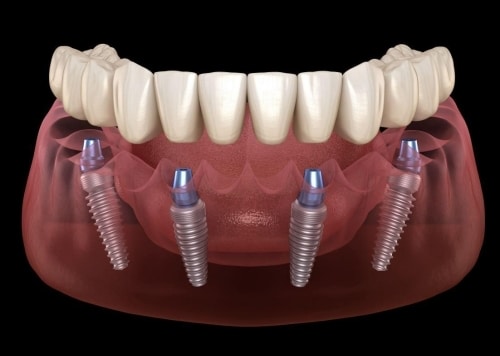
When several missing teeth need replacing – or an entire upper or lower arch needs restoring – the approach changes. Replacing every missing tooth with its own individual implant and crown is prohibitively expensive for most patients. Full arch tooth replacement instead uses a smaller number of strategically placed titanium implants to support a complete set of prosthetic teeth.
All-on-4 uses four implants (two straight at the front, two angled at the back) to support a full arch prosthesis. It’s a cost-effective approach designed to work for a broad range of patients, and the angled posterior placement reduces the need for bone grafting in many cases.
Customised full-arch plans use five, six, or eight implants – the number determined by the patient’s individual bone volume, density, and jaw anatomy. More implants provide better load distribution and are often more appropriate for patients with heavier bites, asymmetrical bone patterns, or jaw geometry that a fixed four-implant template doesn’t suit.
Melbourne Market Ranges
| Approach | Typical Melbourne Cost (per arch) |
|---|---|
| All-on-4 | $23,000–$30,000 |
| Customised plan (5–8 implants) | $25,000–$45,000+ |
These ranges typically include specialist surgical fees, implant components (posts, abutments, fixings), the final prosthetic restoration, 3D imaging, and follow-up appointments. Bone grafting, where required, is additional.
For patients replacing both upper and lower arches, the total cost effectively doubles – though some practices offer a combined treatment discount. Confirm this at consultation.
You can read more about full arch implant options in Melbourne and the All-on-4 approach and its alternatives for context on which approach may suit your situation.
What Should a Cost Estimate Include?
A complete, honest cost estimate should itemise:
- 3D CBCT imaging and treatment planning fees
- Specialist surgical fees (if the surgical and restorative stages are separated)
- Implant components: post, abutment, and fixings
- Final restoration: crown, bridge, or prosthetic arch
- Temporary prosthetic teeth during the healing phase (if required)
- Follow-up appointments and post-surgical review
Treatment plans should be provided in writing before any implant procedure begins. This is standard practice for reputable dental clinics – not something you should need to ask for.
Watch for:
- Quotes showing only the “implant” price without abutment and crown
- Bone grafting mentioned as an additional cost only after the initial quote is provided
- Imaging fees not included in the stated price
- Sedation fees listed separately (sedation for implant surgery is often priced additionally)
Ask for an itemised written estimate before committing to anything. A reputable practice provides this as standard.
Private Health Insurance and Health Fund Coverage for Dental Implants
Private health fund major dental extras cover may provide a partial rebate on components of implant treatment. The amount varies considerably between policies, funds, and the specific item codes claimed.
Item codes relevant to implant treatment include:
- Item 688 – surgical placement of the implant
- Item 318 – crown placed on an implant
- Item 014 – consultation
- Bone grafting procedures carry various codes depending on the type of procedure
Health funds process rebates on individual item codes rather than on the total treatment cost. The rebate on a $5,000 implant treatment might be $800–$1,500, depending entirely on your policy. Do not assume your fund will cover a significant proportion.
The most useful thing to do before your consultation: call your fund and ask specifically what they will rebate for item codes 688 and 318. That gives you a concrete number to plan around.
Practices offering HICAPS allow you to claim health fund rebates on the spot at the time of treatment, rather than submitting manually and waiting for reimbursement.
Does Medicare Cover Dental Implants?
No. Medicare does not cover dental implants in Australia under any circumstances.
Dental implants are entirely outside the Medicare Benefits Schedule, regardless of clinical indication, complexity, or cost. This applies universally – there is no concession cardholder benefit, no DVA pathway, and no clinical exception that brings implants under Medicare coverage.
The cost of implant treatment is borne by the patient, with partial offsets available through private health fund rebates where applicable.
Payment Plans
Most reputable implant practices in Melbourne offer payment plans that spread the cost over time. Payment options commonly available include:
- Practice-managed instalments – typically structured around the treatment stages (deposit at the start, payments at each milestone)
- Third-party finance providers – such as humm (formerly Certegy), DentiCare, SuperCare, or similar, with interest-free periods and fixed repayment plans
Payment plans typically cover the out-of-pocket gap after any health fund rebate is applied. Interest rates, fees, and eligibility requirements vary by provider – confirm the terms before signing anything.
Ask about payment options at your dental implant consultation, before you receive the cost estimate. Knowing the full financing picture helps you make a realistic decision about whether and when to proceed.
The Long-Term Cost Perspective
The upfront cost of dental implants is real. It’s also worth putting in context against the alternatives over a 10- to 20-year horizon.
Removable dentures have a lower upfront cost, but require relining every five to seven years ($300–$800 per relining), full replacement every decade ($1,500–$5,000 per set), and for some patients, ongoing adhesive products. Bone loss continues beneath the denture, progressively changing the fit and, over years, affecting facial structure and the stability of remaining natural teeth.
Over 20 years, the cumulative cost of denture maintenance often approaches or exceeds the cost of implants – without the structural and functional benefits that implants provide.
For patients who want something more stable than removable dentures but are not ready for a full fixed arch, implant retained dentures offer a middle path – two to four implants anchor a removable prosthesis, eliminating movement and improving oral health outcomes long-term.
Dental bridges require grinding down the adjacent teeth to serve as anchor supports. Those adjacent teeth may develop problems over time, and the bridge’s viability depends on their ongoing health. Bridges also do not prevent bone loss in the gap beneath them.
A crown on a tooth with a poor long-term prognosis may buy five to seven years before the tooth ultimately needs extracting and replacing with an implant anyway – at which point you’ve paid for both. A frank, early clinical assessment of whether a tooth is worth saving – or whether an implant is the better long-term path – can avoid that compounding cost.
“Patients sometimes compare implant cost against the cost of doing nothing, or the cheapest alternative,” says Dr Rostkier. “The more useful comparison is: over ten or fifteen years, what is the total cost, the total disruption, and what is the state of my jaw bone and surrounding teeth at the end? That comparison often looks quite different. Choosing dental implants is ultimately a decision about long-term oral health – not just replacing a tooth, but preserving the bone and structure around it.”
See our guide on how long dental implants last for more on the long-term case for implants.
Frequently Asked Questions
How much does a single dental implant cost in Melbourne?
A single tooth dental implant in Melbourne typically costs between $3,000 and $7,000, covering the titanium post, abutment, and custom crown. The variation reflects case complexity, tooth position, crown materials, and whether bone grafting is required. A written, itemised estimate should be provided at consultation before any treatment is agreed.
Why are dental implants so expensive?
Dental implants involve multiple stages across a multi-month timeline: consultation and 3D imaging, specialist surgical placement of the titanium post, a healing period of three to six months for osseointegration, and then fabrication and fitting of the final crown or prosthesis. The materials – precision titanium posts, custom abutments, individually fabricated restorations – are high-quality and patient-specific. The surgical expertise required is specialised. When all of that is factored in, the cost reflects genuine clinical complexity and durable materials, not padding.
Are dental implants cheaper outside Melbourne?
Dental implant costs in regional Victoria and interstate may be somewhat lower, though the difference is often smaller than patients expect. The practical considerations – multiple appointments over a multi-month period, the importance of continuity of care, and travel costs – are worth weighing before travelling for a lower quote.
What about dental tourism – getting implants overseas?
Overseas dental treatment can appear significantly cheaper upfront, but the calculation changes when you factor in return travel for follow-up visits, the difficulty of managing complications from abroad, differences in implant systems and materials, and the limited recourse you have if something goes wrong. For a surgical procedure with a multi-month healing timeline, continuity of care matters. If complications arise – infection, implant failure, poorly fitted restorations – remediation in Australia typically costs more than the original saving.
What is the cheapest dental implant option?
The lowest-cost single tooth implant in Melbourne typically sits around $3,000 for a straightforward case – no bone grafting, a back tooth position, standard crown materials. The cheapest quote is not always the safest choice for a procedure that will be in your jaw for decades. High quality dental implants from established systems (Straumann, Nobel Biocare, and similar) carry clinical track records spanning decades. More important than finding the lowest price is understanding what that price includes, which implant system is being used, and what the qualifications of the placing clinician are.
What if I need bone grafting?
Bone grafting typically adds $2,000–$3,500 to the total cost and extends the overall timeline by three to six months. Not all patients need bone grafting – this is determined by the volume and density of your jaw bone at the implant site, assessed using 3D CBCT imaging at the initial consultation. The need for grafting does not rule out implants; it simply adds a preparatory stage.
Are dental implants tax deductible in Australia?
Dental expenses, including implants, are generally not tax deductible for individuals in Australia. A health fund rebate is the primary mechanism for partially offsetting the cost.
How do I compare quotes between practices?
Ask each practice to provide a written, itemised estimate identifying what is and is not included – imaging, specialist surgical fees, implant components, temporary prosthetics, and follow-up appointments. Comparing all-in figures rather than headline prices gives a more accurate picture. Also ask which stages are handled in-house and which involve referral to a specialist, and what qualifications the implant-placing clinician holds.
Transparent Pricing at Our Balwyn Practice
Balwyn dental implants starts with a thorough consultation and 3D CBCT imaging. Dr Rostkier reviews the imaging, assesses your bone structure, and walks through your options honestly – implant, bridge, denture, or a combination approach – before a recommendation is made. Every patient receives a personalised treatment plan that reflects their specific bone volume, bite, aesthetic goals, and budget.
A written, itemised cost estimate is provided at that consultation. You will know exactly what treatment involves, what it costs, and what the timeline looks like before you agree to anything. No surprises.
For the surgical stage, Dr Rostkier works with trusted specialist periodontists – experienced implant surgeons whose focus is precisely placed implants. Dr Rostkier designs and fits the final restoration, drawing on 25 years of restorative and aesthetic dentistry experience. That structure means specialist-level surgical precision at the placement stage and experienced restorative expertise for the teeth you actually see and use.
We offer HICAPS for on-the-spot health fund claims. Payment plans are available to spread the cost over time. Speak to our team at your consultation to understand your options.
To book a consultation, call (03) 9831 3272 or schedule your dental implant appointment online now. We see patients from Balwyn, Balwyn North, Deepdene, Canterbury, Camberwell, Hawthorn, Box Hill, Surrey Hills, Mont Albert, Kew, and Doncaster.
Dr Steven Rostkier BDSc (University of Melbourne, 1999) has 25+ years of clinical experience in general and restorative dentistry, with a focus on implant dentistry, implant-supported restorations and complex full-arch rehabilitation. He practises at 2a/379-381 Whitehorse Rd, Balwyn VIC 3103. This content is for general information only and does not constitute clinical advice. Individual treatment costs depend on assessment findings specific to each patient.