
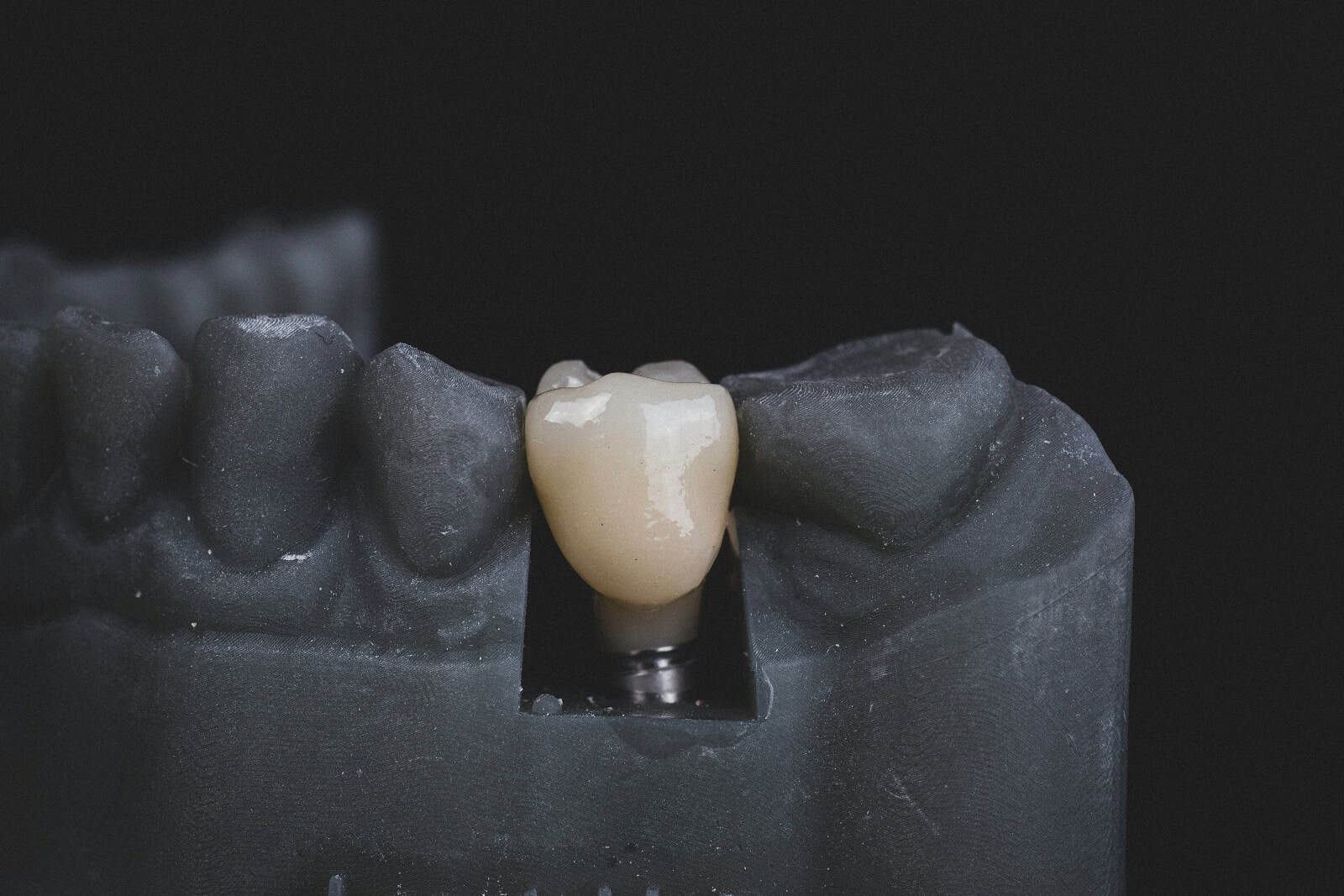

If you’ve been told you might need either a crown or an implant, the first question to ask is: is the tooth still there?
That single question often decides the answer before anything else does. A dental crown caps an existing damaged tooth – one whose root is still present and viable. A dental implant replaces a missing tooth entirely, root and all. In many situations you can’t choose between them, because the state of the tooth makes the decision for you.
The comparison most patients are actually wrestling with is this: “My tooth is badly damaged – can it be saved with a crown, or should it come out and be replaced with an implant?” The implants vs crowns question is rarely abstract – it almost always comes attached to a specific tooth and a specific clinical situation. That is the real question, and it is not always straightforward to answer.
This guide covers when each is appropriate, what the procedures involve, how costs compare, and how long each option lasts – so you can have a more informed conversation when you see your dentist. Whether you are weighing up dental implants vs crowns for a damaged tooth, or trying to understand tooth replacement options after an extraction, the right starting point is understanding what each restoration actually does.
Key Takeaways
- A dental crown caps a damaged tooth whose root is still intact; a dental implant replaces a missing tooth from the root up
- Dental crowns in Australia typically cost between $1,200 and $2,500; single tooth implants typically range from $3,000 to $7,000
- Crowns typically last 10–15 years; titanium implant posts can last a lifetime
- In many cases, you can’t choose between them — the condition of the tooth decides
- A crown is often placed ON TOP of an implant as the final visible restoration
- *Source: Dr Steven Rostkier BDSc, Balwyn VIC (25+ years clinical experience)*
Source: Dr Steven Rostkier BDSc, Balwyn VIC (25+ years clinical experience)
First, Understanding What Each One Does
Dental implants and crowns are frequently discussed as if they compete with each other. They don’t – they solve different problems. Understanding what each one actually does makes the rest of the comparison much easier to follow.
What Is a Dental Crown?
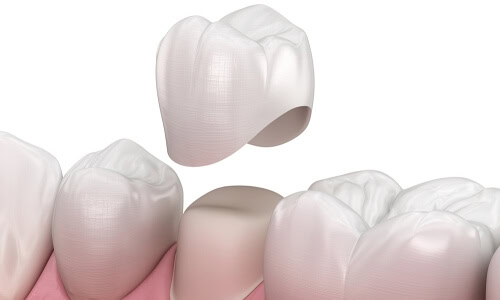
A dental crown is a cap placed over a tooth that is damaged but still has a healthy root. It encases the visible portion of the tooth from the gumline up, restoring its shape, function, and appearance.
Dental crowns are made from a range of materials – porcelain, ceramic, zirconia, or porcelain-fused-to-metal. The right material depends on the position of the tooth, the bite forces involved, and what aesthetic outcome you are looking for. Zirconia is widely used for its durability and natural appearance; your dentist will recommend the most suitable option for your situation. Crowns are one of the most common ways to address damaged or decayed teeth while keeping the natural tooth root in place.
Crowns are used when a tooth is cracked, heavily decayed, broken, or structurally weakened by tooth decay or damage – but the root beneath it remains intact and viable. They are also placed routinely after root canal treatment, where the underlying tooth structure needs protecting against fracture. The existing tooth structure must be able to support the crown for this to be a workable option.
What Is a Dental Implant?
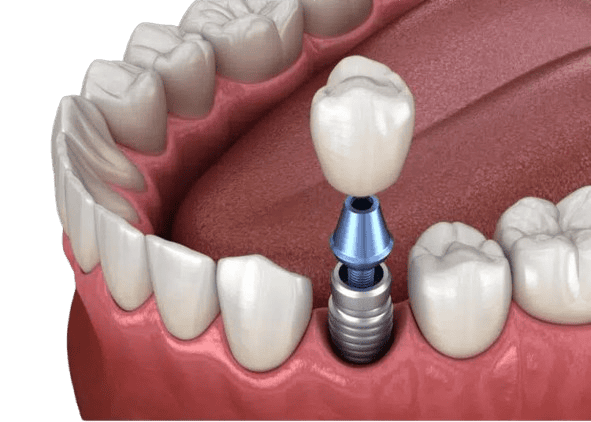
A dental implant is a replacement tooth from the root up. It is designed for situations where a tooth is already missing – or needs to be extracted because it cannot be saved.
The implant itself is a titanium post placed into the jawbone. This artificial tooth root integrates with the surrounding bone through a process called osseointegration, fusing with the jaw over three to six months. An abutment connects the post to a crown on top – the visible, functional replacement tooth.
That brings us to something important: the crown placed on top of an implant is still a dental crown. The same dental restoration is used whether it is sitting on a natural tooth root or on a titanium post. The difference is what anchors it. This prosthetic tooth functions and looks like the natural teeth surrounding it – that is the goal of the restoration in either case.
Implant treatment is typically divided between your regular dentist, who handles planning and the final crown, and a specialist – usually a periodontist or oral surgeon – who performs the surgical placement of the titanium post. The exact arrangement varies by practice.
Can a Crown Go ON an Implant?
Yes – and this is the most common final step in single tooth implant treatment. The titanium post is the implant; the dental crown is what you see and use. A single tooth implant comprises three components: the implant post, the abutment that connects post to crown, and the dental crown itself.
This matters for how you think about the decision. The comparison is not always “crown or implant” – sometimes you get both. Understanding this changes the question from “which one do I choose?” to “is my tooth still there, and can it be saved?”
When You Need a Crown (Not an Implant)
A dental crown is the right path when the tooth root is still present, healthy, and capable of supporting a restoration. If the root can do its job, saving the natural tooth is almost always the better long-term option. Natural teeth have a resilience and sensory function that no artificial tooth root can fully replicate. Restoring damaged teeth with a crown – rather than extracting them – preserves that function and avoids the more involved process of tooth replacement.
The indications for a crown rather than an implant include:
- The tooth is cracked, broken, or heavily decayed, but the root is intact and structurally sound
- The remaining existing tooth structure above the gumline can support a crown
- The tooth has had root canal treatment and needs protecting from fracture
- The bone and gum around the tooth are healthy
- The surrounding teeth are not compromised in a way that affects the crown’s viability
When crown placement is indicated, it is a relatively straightforward dental restoration option. No surgery is involved, healing time is minimal, and the existing tooth continues to function as the anchor. Restoring damaged teeth this way is a core part of restorative dentistry, and for most patients with a viable root, it remains the preferred path. You can read more about dental crowns.
When You Need an Implant (Not a Crown)
Dental implants are indicated when the tooth is missing or when the root is damaged to a point where it cannot support a crown and cannot be saved. When tooth loss occurs – whether through extraction, accident, or advanced disease – implants provide the most complete form of tooth replacement available.
The cases where an implant rather than a crown is the right answer include:
- The tooth has already been extracted, or needs extraction
- The tooth root has a fracture that makes it unrestorable
- Severe root resorption has compromised the root’s structural integrity
- Decay extends so far below the gumline that no viable tooth structure remains for crown placement
- Advanced gum disease has destroyed the bone support around the root to the point where the tooth cannot be retained
- The patient wants a fixed, permanent solution for replacing missing teeth, rather than a dental bridge or denture (both of which are also legitimate options, depending on the clinical situation and how many teeth are missing)
Dental implants provide more than just a replacement tooth – they also preserve the jaw bone in the area where the tooth was lost. When a tooth root is no longer present, the bone around it begins to resorb over time. Bone loss is gradual but progressive, and over years it affects the facial structure, the support of neighbouring teeth, and the overall contour of the jaw. The titanium post stimulates the jaw bone the same way a natural tooth root does, preventing that deterioration. Crowns placed on natural teeth do not provide this benefit – bone loss prevention is one of the most important advantages implants hold over other dental restorations.
You can find out more about dental implants.
The Grey Zone – When the Decision Isn’t Clear
Sometimes a tooth sits between these two categories. It is damaged – possibly heavily – but it has not yet crossed the line into “unrestorable.” The root exists, but its condition is uncertain. The decay is significant, but maybe not beyond what a crown could manage. The tooth could potentially be saved, but whether saving it is the right call is a different question.
This grey zone is one of the most clinically nuanced decisions in dental restoration. It is also the decision that matters most to patients, because the stakes are real: extract too readily and you lose a healthy root that could have been kept; delay extraction on a tooth with a poor prognosis and you may end up with more procedures, more expense, and a worse outcome.
The factors a dentist will consider when assessing a borderline tooth include:
- Depth and extent of decay – how much healthy tooth structure remains above and below the gumline
- Structural integrity – whether the remaining tooth can bear the forces a crown will be subjected to
- Root health – any signs of periapical infection, root resorption, or root fracture visible on imaging
- Bone and gum condition – whether there is adequate support around the tooth
- Overall oral health trajectory – is this a patient who has stable oral health, or are there systemic factors (diabetes, medications, bone density) that affect prognosis?
- Long-term prognosis – a tooth saved today versus a root canal, then a crown, then extraction and an implant in three to five years adds up to far more in total cost and disruption
Sometimes extracting a tooth with a poor prognosis and placing an implant is the more sensible long-term decision. Fewer total procedures, lower cumulative cost, and a more predictable outcome. But that call cannot be made without a clinical examination, X-rays, and in many cases 3D imaging.
Comparing Dental Implants and Crowns
Both dental implants and crowns are established dental restoration options with strong track records. The comparison below shows how they differ on the factors that matter most to patients considering their dental treatment options.
| Factor | Dental Crown | Dental Implant |
|---|---|---|
| What it replaces | Outer structure of a damaged but present tooth | Entire missing tooth (root + visible tooth) |
| Tooth root needed | Yes – root must be healthy and viable | No – implant IS the replacement root |
| Procedure | Non-surgical; same or 2 visits | Surgical; 3–9 month timeline |
| Anaesthetic | Local anaesthetic | Local anaesthetic or sedation |
| Healing time | Minimal (days) | 3–6 months osseointegration |
| Longevity | 10–15 years | Post: lifetime; crown: 10–25 years |
| Bone preservation | No | Yes – stimulates jaw bone |
| Typical Australian cost | $1,200–$2,500 | $3,000–$7,000 per tooth |
| Health fund rebate | Yes (major dental) | Yes (partial, major dental) |
| Best for | Damaged tooth with healthy root | Missing tooth or tooth requiring extraction |
The table is a useful guide, but the choice is rarely made in the abstract – it is made based on whether the tooth is still present and whether the root can be saved. Comparing dental implants vs crowns in isolation only goes so far; the clinical picture is what drives the recommendation.
Cost: Crowns vs. Implants
Crown Costs in Australia
Dental crowns in Australia typically cost between $1,200 and $2,500 per tooth. The variation depends on the material used – zirconia, ceramic, or porcelain-fused-to-metal – the position of the tooth in the mouth, and the complexity of the preparation required.
Most health funds with major dental cover provide a rebate toward crown placement. The out-of-pocket amount depends on your level of cover. Payment plans are available at many practices for patients who need to spread the cost.
Implant Costs in Australia
A single tooth implant in Australia typically ranges from $3,000 to $7,000. This covers the titanium post, the abutment, and the dental crown placed on top. Where bone grafting is required – to build up jaw bone volume before the post can be placed – additional costs apply. Not every patient needs bone grafting; this is assessed at consultation using 3D imaging.
For a full breakdown of what affects the final figure, see our page on how much dental implants cost in Melbourne.
Health funds can provide partial rebates toward implant treatment under major dental cover. Confirm with your dentist and health fund what your specific policy covers before treatment begins.
Long-Term Cost Perspective
The upfront cost difference between dental crowns and implants is real. But so is the long-term cost picture. A dental crown placed on a tooth with a poor prognosis may need replacing in five to eight years – and if the tooth ultimately requires extraction, you then face implant costs on top of the crown costs already spent. A properly planned implant, by contrast, typically lasts 20 or more years with proper care.
It is worth discussing the long-term cost implications with your dentist at consultation. Dental insurance plans vary considerably in what they cover for each treatment type, so it is worth checking your specific level of cover before treatment begins. The goal is to give you a clear picture so you can make the right decision for your situation, not just the one that looks cheaper today.
Procedure: What to Expect
Getting a Dental Crown
Crown placement at most dental practices follows a consistent process. Your dentist prepares the tooth by removing damaged or decayed structure and shaping it to accept the crown. Impressions are taken – either traditional moulds or, increasingly, a digital scan using an intraoral scanner – and sent to a dental lab where the permanent crown is made. A temporary crown is placed while you wait. One to two weeks later, the permanent crown is fitted at a second appointment.
At many practices, crowns require two visits – one for preparation and impressions, and a second to fit the permanent crown. At our Balwyn practice, many crowns are completed in a single visit using CAD-CAM technology and a digital intraoral scanner. The crown is designed and milled in-house, eliminating the need for temporary crowns in straightforward cases. Where the aesthetics or complexity of a case call for a dental lab, a second appointment is scheduled as usual.
Local anaesthetic is used for the preparation. There is no surgical component. Most patients experience some sensitivity for a few days after crown placement, which settles quickly. Normal function is resumed almost immediately.
Getting a Dental Implant
The dental implant procedure involves more stages and a longer overall timeline.
It begins with a consultation, clinical examination, and imaging. Your dentist will assess jaw bone volume, the condition of adjacent teeth, and your overall oral health to determine whether you are a candidate for implant placement and whether bone grafting will be needed. Treatment planning is detailed – you should know exactly what the process involves before it begins.
The surgical placement of the titanium post is performed under local anaesthetic, typically by a specialist periodontist or oral surgeon. Sedation options are available at many practices for patients who are anxious or prefer a more relaxed experience. As with any surgical or invasive procedure, there are associated risks – these are explained in detail at consultation so you can make an informed decision. The implant surgery itself typically takes one to two hours. At our Balwyn dental practice, implant planning involves 3D imaging, and the surgical placement is performed by a specialist periodontist.
After surgery, the healing period begins. Over three to six months, the titanium post undergoes osseointegration – fusing with the jaw bone so it can bear the load of the crown. This is not a period of significant discomfort; most patients manage post-surgical soreness with standard pain relief and return to normal activity within a few days.
Once osseointegration is confirmed, the dentist fits the abutment and designs the final dental crown. Total timeline from consultation to final crown: three to nine months, depending on the case and whether bone grafting was required.
Longevity – How Long Does Each Last?
Dental crowns placed on natural teeth typically last 10 to 15 years. Longevity depends on the quality of the underlying tooth, the bite forces the crown is subject to, the material used, and how well oral hygiene is maintained. A crown on a molar – which takes the full force of chewing – will generally experience more wear than one on a front tooth.
Titanium implant posts, once fully integrated, can last a lifetime. The 10-year success rate for dental implants is consistently reported at 95 to 98%. The dental crown placed on top of an implant typically lasts 10 to 25 years depending on wear and care. In some cases, the crown on an implant may need replacement before the implant post itself – this is a simpler and less costly procedure than the original implant surgery.
Both dental implants and crowns benefit significantly from regular check-ups, professional cleaning, and good oral hygiene at home. Maintaining good overall oral health is the single biggest factor in maximising the lifespan of either restoration. For a detailed look at the factors that affect implant lifespan, see our posts on how long dental implants last and how long dental crowns last.
Frequently Asked Questions
Is it better to get an implant or a crown?
The answer depends almost entirely on whether your tooth is still present and whether the root is viable. If your tooth is still in place and the root is healthy, a dental crown is almost always the preferred option – natural teeth have properties that no artificial tooth root can replicate, and keeping them is nearly always better long-term. If the tooth is missing or needs extraction, a dental implant provides the most permanent solution for replacing missing teeth. Comparing dental implants vs crowns as competing alternatives only makes sense when the tooth is borderline – and in those cases, only a clinical examination can determine the better path.
When is a tooth too damaged for a crown?
A tooth is generally considered unrestorable when the root is fractured, when severe root resorption has compromised its structural integrity, or when decay has progressed so far below the gumline that no viable tooth structure remains to support crown placement. A broken tooth where the fracture extends into the root, rather than just the crown, typically falls into this category. Advanced gum disease that has destroyed the bone support around a tooth can also make it unrestorable. In these situations, extraction followed by a dental implant – or a dental bridge vs implant assessment – becomes the appropriate conversation. See our page on dental bridge vs implant for more on that comparison.
Can a crown be placed on an implant?
Yes – this is standard procedure and is in fact the most common way dental implants are restored. The implant post replaces the tooth root, and a dental crown is placed on top to provide the visible, functional replacement tooth. The crown on an implant is custom-made to match your surrounding natural teeth in size, shape, and colour.
How much does a crown cost vs. an implant in Australia?
Dental crowns in Australia typically range from $1,200 to $2,500 per tooth depending on the material and complexity. Single tooth implants – including the titanium post, abutment, and crown – typically range from $3,000 to $7,000. Where bone grafting is required prior to implant placement, additional costs apply. Health fund rebates apply to both under major dental cover, and payment plans are available at many practices. A full cost breakdown should be provided at consultation before any treatment is agreed to.
How long does a crown last compared to an implant?
Dental crowns on natural teeth typically last 10 to 15 years with proper care. Titanium implant posts can last a lifetime – the 10-year success rate is 95 to 98%. The dental crown placed on top of an implant generally lasts 10 to 25 years, depending on bite forces, oral hygiene, and wear. In both cases, longevity is strongly influenced by regular check-ups and professional hygiene appointments.
Do implants require more recovery than crowns?
Yes, significantly. Crown placement involves no surgery – the healing period is typically a few days of mild sensitivity that settles quickly, and patients can eat normally almost immediately. Implant treatment involves a surgical procedure to place the titanium post, followed by a three to six month healing period for osseointegration before the crown can be fitted. The surgical recovery itself is manageable for most patients – soreness for a few days, managed with standard pain relief – but the overall implant procedure timeline is considerably longer than crown placement.
Does getting a crown hurt?
Crown placement is performed under local anaesthetic, so the procedure itself is painless. After the anaesthetic wears off, most patients experience some sensitivity around the prepared tooth for a few days. This settles quickly and is managed easily with over-the-counter pain relief if needed.
Does getting an implant hurt?
Implant surgery is performed under local anaesthetic – patients do not feel the procedure while it is happening. Sedation options are available at many practices for patients who prefer a more relaxed experience. Post-surgical soreness is normal and typically managed well with standard pain relief over the first few days. Most patients report that the discomfort is less significant than they expected. The longer recovery is the healing period for osseointegration, which is not painful – it simply takes time.
What about dental veneers – how do they fit in?
Dental veneers are a cosmetic dentistry option that covers the front surface of a tooth to improve its appearance. They are not a structural restoration – they do not replace a tooth or protect a damaged tooth the way a crown does. Veneers are appropriate when the underlying tooth is intact and the goal is purely aesthetic improvement. If a tooth is structurally compromised, a crown is the better choice. If it is missing, only a dental implant or bridge addresses the problem.
What if I’m not sure whether I need a crown or implant?
That is exactly what a consultation is for. The difference between dental implants and crowns cannot be determined by symptoms alone – it requires a clinical examination, X-rays, and in many cases 3D imaging to assess the root, bone, and surrounding structures properly. A clear, honest recommendation based on clinical findings is what you should expect. There is no pressure in either direction – the goal is to give you the information you need to make the right decision for your situation.
In Melbourne and Considering a Crown or an Implant?
If your tooth is damaged, missing, or you have been advised that you might need a dental crown or a dental implant in Balwyn, the next step is a proper examination. Dr Steven Rostkier will assess with X-rays and, if needed, 3D imaging to give you a clear, honest recommendation on whether the tooth can be saved and what that looks like in practice – or whether an implant is the better long-term path.
No pressure. No upselling. Just a clear answer about what your tooth actually needs.
Call (03) 9831 3272 or book online to arrange an appointment, or visit us at 2a/379-381 Whitehorse Rd, Balwyn VIC 3103. All-day street parking is available on Whitehorse Road and surrounding streets, and the practice is accessible by tram along Whitehorse Road.