
If you’re missing one or more teeth, you’ve probably heard implants described as the gold standard. That’s the easy answer. The harder question, and the one most patients are actually asking, is whether the cost, time, and surgery are worth it for your situation.
Dental implant treatment is the most durable tooth replacement available today. They’re also the most expensive option upfront, and the process takes months from start to finish. For some patients they’re a clear yes. For others, a well-fitted bridge or denture is the better fit, and being honest about that builds trust.
This article walks through the full picture: what implants actually do, the real pros and cons, who is and isn’t a good candidate, how implants compare to bridges and dentures, what the costs look like in Melbourne, and what the process involves.
Key Takeaways
- Single dental implants typically last 20+ years with proper care; the crown portion may need replacement after 10 to 15 years
- Melbourne costs range from $3,000 to $7,000 for a single implant (post, abutment, and crown); bone grafting adds $2,000 to $3,500 where needed
- Implants preserve jawbone over time; bridges and dentures do not
- Not everyone is a candidate: active gum disease, insufficient bone density, smoking, and certain medical conditions can affect eligibility
- The full process typically takes 4 to 9 months from consultation to final crown
What Dental Implants Actually Do (and Why That Matters)
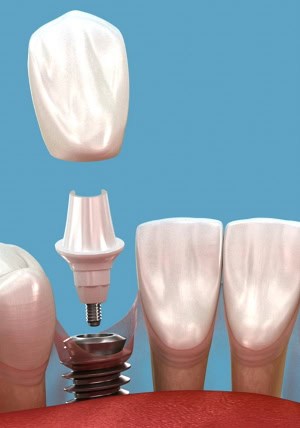
A dental implant is a small titanium post placed into the jawbone where a missing tooth root used to sit. Once it heals, an abutment connects the post to a crown, which is the visible tooth-shaped part on top. Together, those three components replace a single tooth from root to crown.
The reason implants outperform other options long-term comes down to bone. When a natural tooth is lost, the jawbone underneath it gradually shrinks, a process called resorption. This happens because the bone no longer receives the stimulation of a tooth root pressing into it during chewing. A titanium implant takes over that job. The bone fuses to the post (osseointegration) and continues to be stimulated, which preserves jaw structure and facial shape over decades.
Bridges and dentures sit on top of the gum or attach to neighbouring teeth, so the bone underneath the missing tooth keeps shrinking. That’s the structural reason implants stand alone on long-term bone health.
The Pros and Cons
After 25+ years of restorative work in Balwyn, Dr. Steven Rostkier sees the question this way: a balanced look matters more here than a sales pitch. Implants suit many patients beautifully, and aren’t right for others.
Advantages:
- Permanent feel and function: no slipping, no adhesives, no removing them at night
- Preserves jawbone and facial structure over the long term
- Doesn’t affect adjacent teeth, unlike a traditional bridge that requires grinding down healthy neighbouring teeth for support
- A 20+ year lifespan when properly placed and maintained
- Improved confidence in eating, speaking, and smiling compared with removable dentures
Disadvantages:
- Higher upfront cost than alternatives (covered in detail below)
- Requires surgery, with associated recovery time and a small risk of complications
- The full process takes 4 to 9 months from consultation to final crown
- Not suitable for everyone: bone density, systemic health, and smoking all affect eligibility and outcomes
- Health funds provide partial rebates but won’t cover the full cost
A word on pain, since most patients ask. The surgery itself is performed under local anaesthetic, so the procedure is comfortable. Post-operative soreness for a few days is normal and is typically well managed with over-the-counter pain relief. Most patients are surprised by how mild the recovery is.
How Dental Implants Compare to Bridges and Dentures
The right answer depends on bone availability, budget, general health, and how many teeth are missing. Bridges and dentures aren’t inferior options, they’re the right answer for many patients. Here’s a side-by-side look.
| Factor | Dental Implant | Bridge | Denture |
|---|---|---|---|
| Bone preservation | Yes, stimulates the jawbone | No | No |
| Lifespan | 20+ years (post); crown 10 to 15 years | 10 to 15 years before replacement | 5 to 8 years before reline or remake |
| Adjacent teeth impact | None | Requires grinding down neighbours | None |
| Chewing function | 90%+ of natural tooth function | Close to natural | 10 to 30% with full dentures |
| Maintenance | Brushing and flossing as normal | Special floss threader required | Daily removal, cleaning, adhesive |
| Typical Melbourne cost | $3,000 to $7,000 per tooth | $2,500 to $5,500 per unit | $1,500 to $4,000 |
| Surgical requirement | Yes | No | No |
The headline advantage of implants is permanence. The headline disadvantage is upfront cost. But upfront cost isn’t the same as lifetime cost.
A traditional bridge typically needs replacement every 10 to 15 years. Over a 20 to 30 year horizon, two or three bridge replacements can match or exceed the upfront cost of a single implant, depending on case complexity and what dental work is needed alongside each replacement.
Dentures need relining every 2 to 5 years and remaking every 5 to 10 years, with ongoing adhesive and maintenance costs in between. Once total cost over time is on the table, the “implants are expensive” judgement softens. This isn’t a guaranteed outcome (real lifetime cost depends on many factors including general dental health, materials, and the specifics of each replacement), but it’s worth thinking about before assuming implants are always the pricier choice.
For multi-tooth cases, an implant-supported bridge (two implants spanning three or four crowns) can offer the bone-preservation benefit of implants without the cost of one implant per tooth.
Who Is (and Isn’t) a Good Candidate
Eligibility is decided on clinical criteria, not age. Most adults in reasonable health are candidates, but a few things genuinely matter.
Good candidates typically have:
- Adequate bone density in the jaw, or bone that can be built up with grafting
- Healthy gums; active periodontal (gum) disease must be treated and resolved before implants are placed
- No uncontrolled systemic conditions that significantly impair healing (uncontrolled diabetes and active cancer treatment are common examples)
- Either non-smoker status or commitment to quitting; smoking substantially increases the risk of implant failure
- A fully developed jaw, which isn’t a concern for most adults
Patients who may not be suitable:
- Those with very limited bone volume who are unwilling or unable to undergo grafting
- Patients whose medical history makes prolonged healing unreliable
- Those for whom the cost is genuinely prohibitive with no realistic financing path
A consultation is the only way to determine individual suitability. Bone density is assessed with imaging (typically a CBCT scan), and every case is different. A clear no from a thorough assessment is more useful than a hopeful yes that ends in a failed implant.
What Dental Implants Cost in Melbourne
Costs vary based on bone quality, whether grafting is needed, the experience of the treating team, and the materials used. The figures below reflect typical Melbourne private practice ranges.
- Single implant (post, abutment, and crown): $3,000 to $7,000 depending on complexity
- Bone grafting where required: $2,000 to $3,500 additional
- Implant-supported bridge: from approximately $7,000 to $14,000 depending on the number of implants and crowns
- Full arch, customised 5 to 8 implant plan: $25,000 to $45,000+
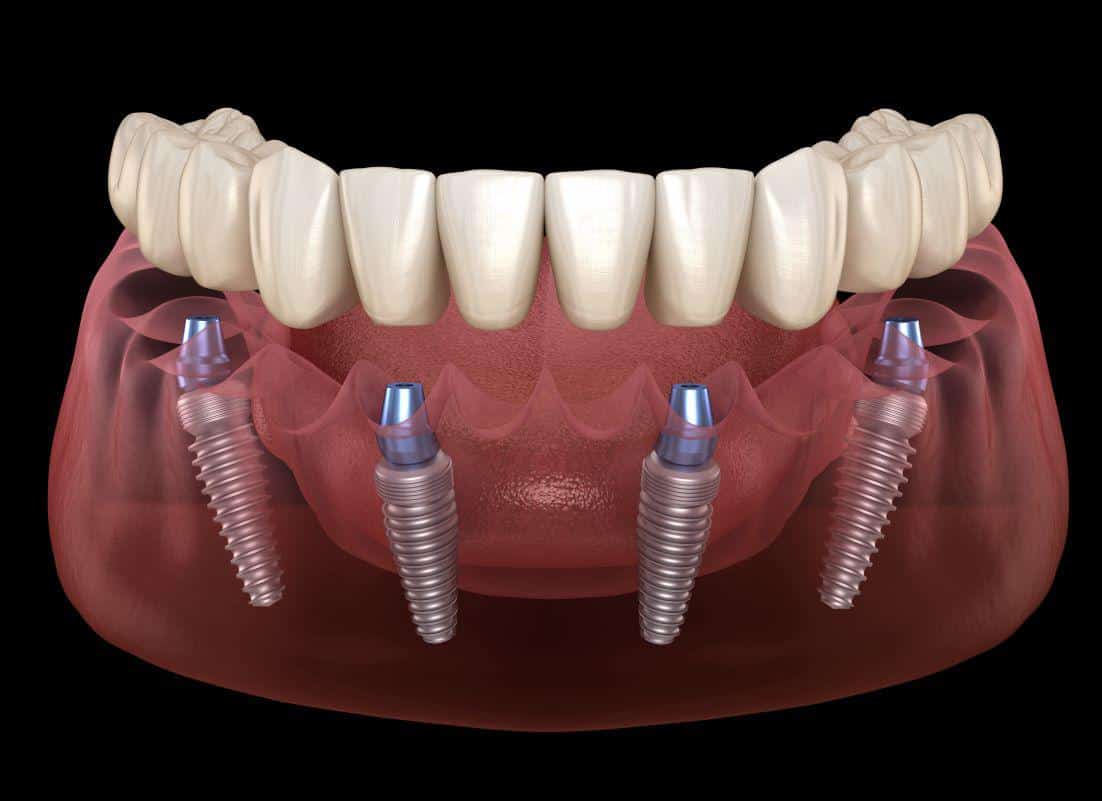
- All-on-4 (where clinically appropriate, one approach among several): $23,000 to $30,000 per arch
Health fund extras cover some components and reduce out-of-pocket costs, but no fund covers the full amount. There is no Medicare subsidy for dental implants for most adult patients.
What a Complete Implant Quote Should Include
Many initial quotes leave items out, and patients then end up comparing apples to oranges. A complete written quote should itemise the initial consultation and imaging (including the CBCT scan), the implant fixture, the abutment, the crown, any bone grafting, and the laboratory fee. Anything quoted as “from $X” usually has one or more of these missing. Ask for a written, itemised quote up front so you know exactly what you’re comparing.
How the Implant Process Works (Brief Overview)
The full process unfolds over four stages and typically takes 4 to 9 months from start to finish. Dr. Steven Rostkier coordinates the timing of each stage so the schedule fits the patient’s life rather than rushing the bone biology.
Consultation and imaging. Your dentist will take a CBCT scan, assess bone volume and gum health, review your medical history, and discuss treatment options. A written quote is provided at this stage.
Surgical placement. The implant post is placed into the jawbone under local anaesthetic. Sedation options are available for patients who prefer additional relaxation. The procedure typically takes 1 to 2 hours per implant.
Healing and osseointegration. The bone fuses to the implant post over 3 to 6 months. During this time a temporary tooth or denture may be worn for cosmetic and functional reasons.
Final restoration. Once the implant has integrated, the abutment is fitted and a custom crown is placed. The result is a permanent tooth that looks, feels, and functions like a natural one.
For full procedural detail (including imaging, sedation, and recovery), see the dental implants service page.
Frequently Asked Questions
How long do dental implants last?
The titanium implant post itself often lasts 20 years or longer, and many last a lifetime when well maintained. The visible crown portion typically needs replacement after 10 to 15 years due to normal wear, in the same way any restoration eventually does.
Are dental implants painful?
The surgery is performed under local anaesthetic, so the procedure itself is comfortable. Post-operative soreness for several days is typical and is generally well controlled with over-the-counter pain relief. Most patients describe the recovery as milder than they expected.
Can dental implants fail, and how common is it?
Yes, but failure is uncommon. A 2019 systematic review and meta-analysis published in the Journal of Dentistry pooled data from 18 studies and reported a 10-year implant survival rate of around 96% (96.4%, 95% CI 95.2 to 97.5%). A more conservative analysis adjusting for loss to follow-up returned 93.2%. The most common causes of failure are smoking, untreated gum disease, and poorly controlled diabetes.
Does private health cover dental implants in Australia?
Most major health funds offer partial cover for implants through extras (major dental) cover, but no fund covers the full cost. Coverage varies significantly by fund, level of cover, and any waiting periods. Check your specific policy before treatment, and request a written quote with item codes so your fund can confirm rebates in advance.
Is there an age limit for dental implants?
No. Implants have been successfully placed in patients well into their 80s. Eligibility is determined by bone density, systemic health, and healing capacity, not by birthdate. For a detailed guide, see dental implants for seniors.
How long does the whole process take?
Most cases take 4 to 9 months from consultation to final crown. The longest phase is healing and osseointegration (3 to 6 months), during which the bone fuses to the implant. Cases requiring bone grafting may take longer.
Are implants worth it if I’m missing multiple teeth?
Often yes, particularly because an implant-supported bridge can replace several teeth using only two or three implants rather than one per tooth. This brings down the per-tooth cost while preserving bone. A consultation will determine the right approach for your specific case.
What happens if I don’t have enough bone for an implant?
Bone grafting can build up bone volume in many cases, allowing implants to proceed after a healing period. Where grafting isn’t suitable, alternatives include mini implants (smaller diameter, requiring less bone) or a well-fitted bridge or denture.
Considering Dental Implants in Balwyn?
Dr. Steven Rostkier’s Balwyn practice offers dental implants as part of restorative dental care. With over 25 years in practice, Dr. Rostkier takes a preventative approach focused on long-term outcomes rather than quick fixes.
The first consultation includes a full health and bone assessment, imaging, a discussion of all suitable options (not just implants), and a written, itemised quote so you know exactly what’s involved before committing. HICAPS is available for on-the-spot health fund claims, and payment plans are available for treatment that needs spreading out.
The Balwyn practice serves patients from across the inner east, including Canterbury, Camberwell, Kew, Box Hill, and surrounding suburbs.
If you’re weighing up whether dental implants in Balwyn are right for you and are based in or around Balwyn, book a dental implant consultation or call (03) 9831 3272 to arrange a consultation.
2a/379-381 Whitehorse Rd, Balwyn VIC 3103
This content is for general information only and does not constitute clinical advice. Individual treatment costs and outcomes depend on assessment findings specific to each patient.
Sources
- Howe MS, Keys W, Richards D. Long-term (10-year) dental implant survival: A systematic review and sensitivity meta-analysis. Journal of Dentistry, 2019. https://pubmed.ncbi.nlm.nih.gov/30904559/