Catch tooth decay early and the fix is usually simple; leave it and the treatment grows. Dr Steven Rostkier treats decay at every stage at our Balwyn practice.
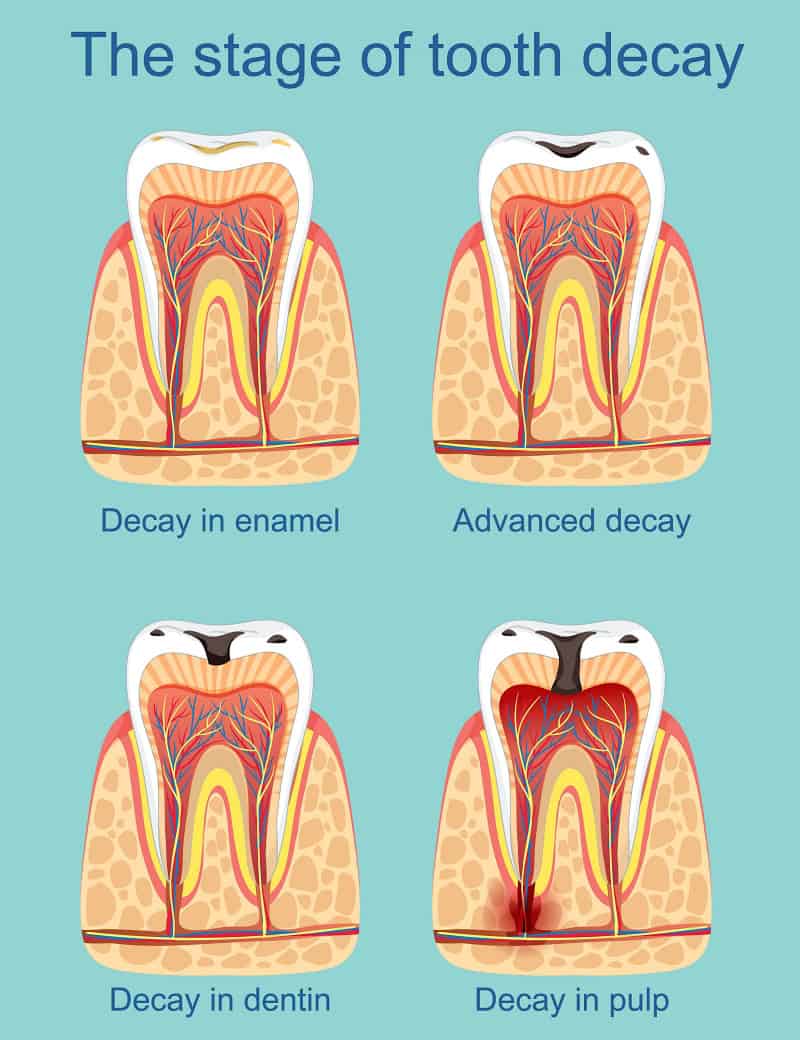
Tooth decay is what happens when bacteria in the mouth feed on sugars and produce acid. That acid gradually wears through the hard outer layer of the tooth (the enamel), then the softer layer underneath (the dentine), and if it is not treated it can reach the nerve in the centre of the tooth.
You can think of it a bit like rust working through metal. The longer it has been going, the more of the tooth it has eaten through, and the more involved the repair becomes.
What Causes Tooth Decay?
Tooth decay is very common, and it is rarely caused by one thing on its own. The usual risk factors are:
A diet high in sugary or acidic food and drinks
Inconsistent brushing and flossing, especially before bed
Dry mouth, often a side effect of medications, which reduces the protective effect of saliva
Skipping regular check-ups, so small problems are not caught early
Deep grooves on the chewing surfaces of back teeth, which are harder to clean
If a few of these apply, you are not alone. Most adults have had decay at some point, and the goal is catching it early enough that treatment stays small.
Book online today or call to inquire about how we can help.
The softer inner layer is now affected. You may notice sensitivity to cold or sweet, or pain when biting. A filling or onlay can usually still save the tooth.
If decay is left untreated long enough the tooth may not be salvageable, and replacement options come into play.
The good news: there is an effective treatment at every stage, and the earlier we catch it the simpler it is.
How Dr Steven Rostkier Treats Tooth Decay
Treatment is matched to the stage of decay. There is no one-size answer, and Dr Rostkier walks you through the options before any decision.
1
Preventive care and monitoring
For very early enamel damage with no cavity yet, the right call is often improved home care, a fluoride application, and a watching brief at your next check-up and clean.
2
White fillings
Once a cavity has formed, a white (composite) filling is the standard treatment. They are tooth-coloured, blend with your natural tooth, and are usually completed in a single visit.
3
Crowns and onlays
When decay has destroyed too much of the tooth for a filling alone, a crown or onlay is needed. Dr Rostkier uses CAD-CAM technology for a precise digital fit, with the restoration made on-site in suitable cases.
4
Root canal treatment
When decay reaches the nerve, a root canal saves the tooth by removing the damaged inner tissue. Dr Rostkier uses rotary endodontic instruments, which make the process faster and more comfortable than older manual techniques.
5
Extraction (last resort)
If decay has gone too far and the tooth cannot be saved, extraction is the last option, followed by a conversation about replacement options.
Prevention: The Best Treatment Is Avoiding It
Dr Rostkier's approach is preventative first. Most decay is preventable with consistent basics: brushing twice a day, flossing once a day, going easy on sugary snacks between meals, and a professional clean every six months. We were one of Victoria's first dedicated hygiene departments, running for nearly 30 years. A regular hygiene visit catches the early signs of decay long before you would feel anything.
Think You Might Have Decay? Book a Check-Up
Decay often produces no obvious symptoms until it has progressed past the easy-to-fix stage. A check-up is the only way to know for sure, and Dr Rostkier’s appointments are unhurried, so there is time to ask questions and understand what is going on. HICAPS for on-the-spot health fund claims, payment plans available.
Catching something early is always better. That is what check-ups are for.