
Dr Steven Rostkier provides comprehensive gum disease treatment to restore gum health and prevent tooth loss.
New patient - free follow up appointment
Providing expert dental care
Dental technology
Plans & private health rebates available
Trusted by partners




The early stage. Gums look red, feel a bit puffy, and bleed when you brush or floss. The bone around the teeth is still intact. Fully reversible with a professional clean and better home care.
Pockets start to form between the teeth and gums where bacteria hide from your toothbrush. Some bone loss begins. The bone damage does not reverse, but the disease can be stopped here with deeper cleaning.
Pockets deepen, more bone is lost, and gums start to recede. Teeth may look longer or feel more sensitive at the gum line. Treatable, but the work is more involved.
Significant bone loss. Teeth become loose, may shift, and start to feel different when you bite down. This stage usually needs a specialist, and tooth loss becomes a real risk.
Most patients sit somewhere in the first three stages and have no idea, because gum disease is mostly painless until quite late.
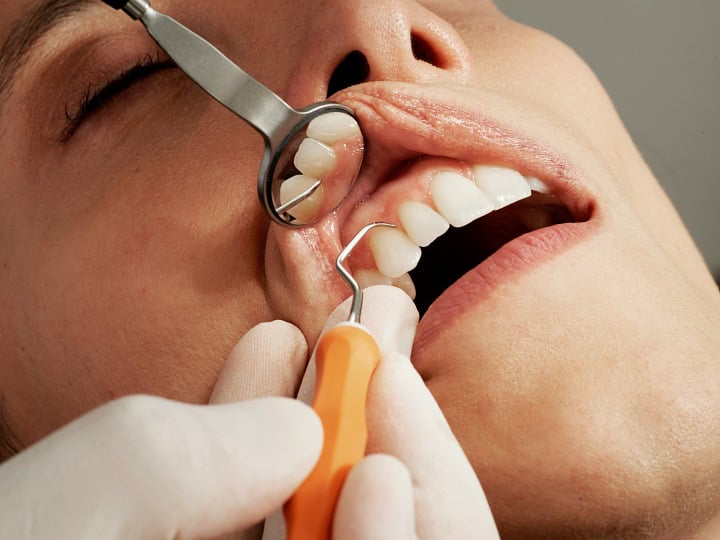
The classic early sign is bleeding when you brush or floss. Healthy gums do not bleed. Other common signs:
A lot of these are easy to dismiss individually. The pattern is what matters, especially the bleeding. If your gums bleed regularly when you brush, that is not normal, and it is reason enough to come in.
At its root, gum disease is an infection caused by bacteria building up along the gum line. The common drivers:
Plaque forms within hours of brushing, and the bacteria in it release toxins that inflame the gums. It is your body's reaction to that infection that slowly breaks down the gum and bone around your teeth. If plaque sits long enough to harden into tartar, only a clinical scale can remove it. This is the single biggest cause.
Smokers are several times more likely to develop gum disease. Smoking narrows the blood vessels in the gums, so less oxygen and fewer nutrients reach the tissue. Infection takes hold more easily, and the gums heal slowly because they are starved of the blood supply they need to recover.
Poorly controlled diabetes makes gum infection more likely and harder to treat, because high blood sugar weakens the body's ability to fight bacteria and repair damaged tissue. The link runs both ways: the inflammation from gum disease also makes blood sugar harder to manage.
Some people are simply more susceptible. Their immune system reacts more aggressively to the same bacteria, doing more damage to the surrounding gum and bone in the process. If a parent lost teeth to gum disease, your risk is higher.
Overlapping teeth create tight gaps and corners that a brush and floss struggle to reach. Plaque collects in those spots and sits undisturbed, building up faster than it would around well-aligned teeth.
Pregnancy and menopause raise hormone levels that increase blood flow to the gums and make them more sensitive, so they inflame more easily in response to plaque. Some medications add to the risk by reducing saliva, which normally helps wash bacteria away.
Good daily home care plus a regular professional clean prevents gum disease in most people. When risk factors stack up, the rules get stricter.

Treatment depends on the stage. We start every gum case with a proper assessment: pocket depth measurements at each tooth and, where needed, x-rays to check bone levels.
For gingivitis, a thorough clean plus a review of your brushing and flossing technique is usually enough. Many patients are surprised how much difference proper interdental cleaning makes.
For mild-to-moderate periodontitis, this deep clean removes plaque and tartar from below the gum line and smooths the root surfaces so the gum can reattach. Done under local anaesthetic, usually across one or two appointments depending on how much is involved.
Patients with a history of gum disease typically need cleans every three to four months, not the standard six. The bacteria come back; the goal is to stay ahead of them.
For advanced gum disease that needs surgery, we work with a trusted periodontist (gum specialist) who handles procedures like flap surgery and bone grafting. Dr Rostkier stays involved throughout, so the specialist handles the surgical work while your overall care stays in one place.
Gum disease rarely hurts in the early stages, so it is easy to leave it and assume nothing is wrong. The catch is that the bone holding your teeth in place doesn't grow back once it's lost.
Caught early as gingivitis, a thorough clean and some help with your brushing usually turns things around completely. Once it has reached the point of bone loss, the best we can do is stop it where it is and keep it stable, often with deeper cleaning and, in advanced cases, a periodontist.
That is still a good result, but it is managing a problem rather than undoing it. The earlier you come in, the less there is to manage.

If your gums bleed when you brush, the gum line is creeping back, or it has been over a year since your last clean, it is worth getting checked. Dr. Rostkier’s appointments are unhurried, so there is time for a proper periodontal exam and a real conversation about what comes next. HICAPS and payment plans available.
A clean today is much cheaper than a periodontist later.
Are you currently registered as an existing patient, or are you a new patient?
Adding {{itemName}} to cart
Added {{itemName}} to cart